
Shaping agentic AI
Agentic AI Foundation
Vstorm was the first agentic AI engineering company to join the Agentic AI Foundation and received its 2026 Open Agentic AI Innovation Award.
Read the announcementInvoices matched to the order before they reach AP
An agent reads each invoice, matches it to the purchase order and receipt, and hands your AP team the exceptions and the approvals you choose.
Intake agentAgent
inbox.fetch_invoice supplier email and PDF parser.read_invoice header, lines and tax A supplier invoice is read from the AP inbox, scanned pages included.
Matching agentAgent
erp.get_purchase_order order lines and prices erp.get_receipt goods received match.three_way invoice, order, receipt in code Quantities match, but one unit price is above the purchase order. Approve the difference or send it back?
Posting agentAgent
erp.post_invoice coded to the cost centre Invoice posted with the match result and the approval, ready for the next payment run.

Three-agent product advisor guiding customers through print-order configuration.
Read case study
HIPAA-compliant guideline-executing triage — 42% to 98% on the open 50-scenario benchmark.
Read case study
Text-to-workflow agents building validated node graphs inside the platform.
Read case study
Supply chain intelligence agents reducing manual coordination overhead.

AI agent implementation for a global automotive enterprise.

Bilingual English/Arabic agent inside ARIJ's Moodle environment, answering only from ARIJ's own knowledge base.
Agents do the reading and matching, and your AP team approves what gets paid.
Where it stallsAP staff retype the same fields from every invoice.
What we do An agent reads supplier, dates, lines and tax from PDFs and scans, each pinned to its place on the page.
Where it stallsMismatches with orders surface at payment time.
What we do Code compares each invoice with the purchase order and the receipt before anything is posted.
Where it stallsEvery supplier sends a different layout.
What we do The agent reads fields by meaning across layouts. A field it is unsure of goes to a person.
Whatever comes in, every project is built from the same parts below, set up for your files and your systems.
Invoices we process
How we build it
Supplier, dates, line items and tax read from PDFs and scans, each field linked to its source.
Invoice lines checked against the purchase order and goods receipt by rules your team can test.
Coded invoices posted to your ERP through its API, with the access rights you set.
Tolerances and stop rules agreed with your finance team and enforced in the system.
Not seeing your case? Bring the invoices that need the most manual work and we start from those.
Tell us about your workflowThey work in the tools your team already uses, take on whole tasks and stop for a person where you decide.
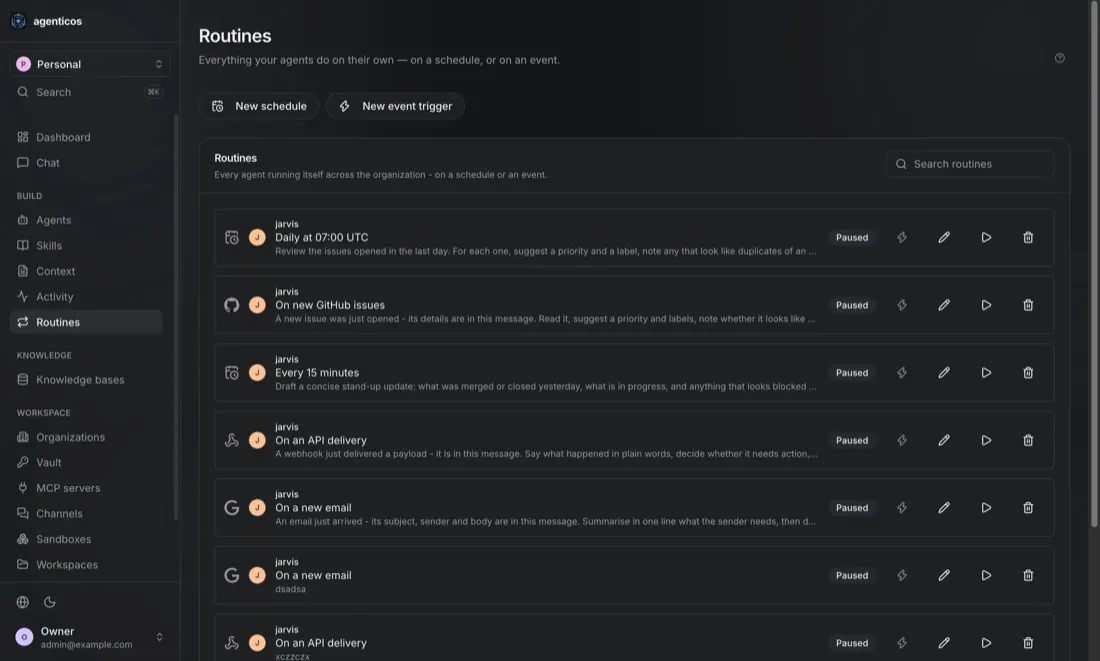
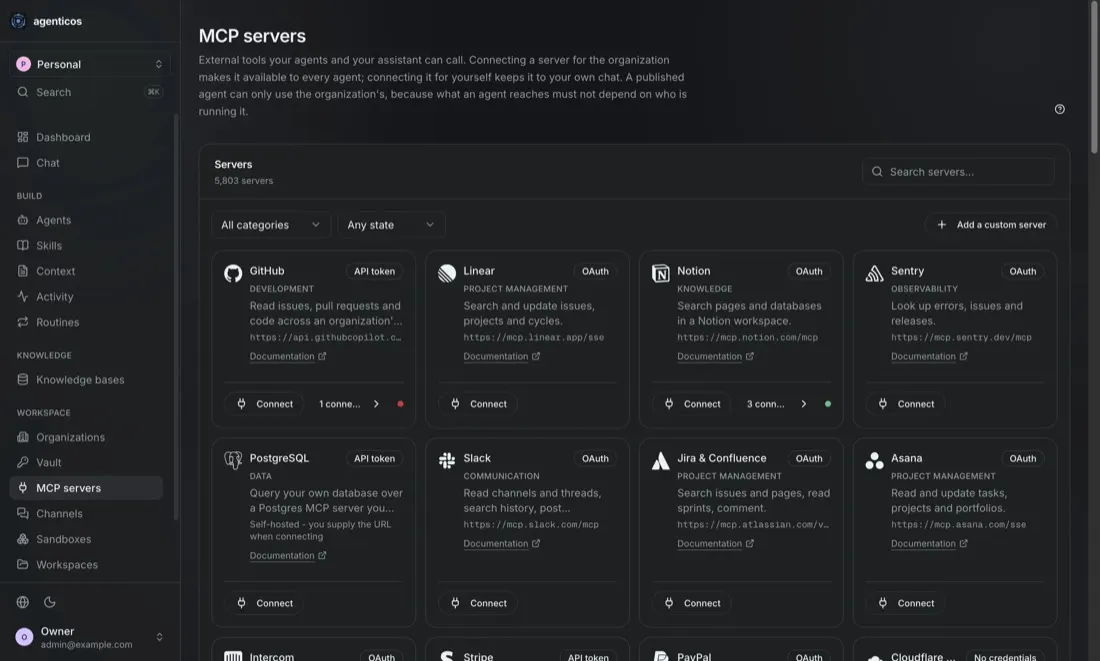
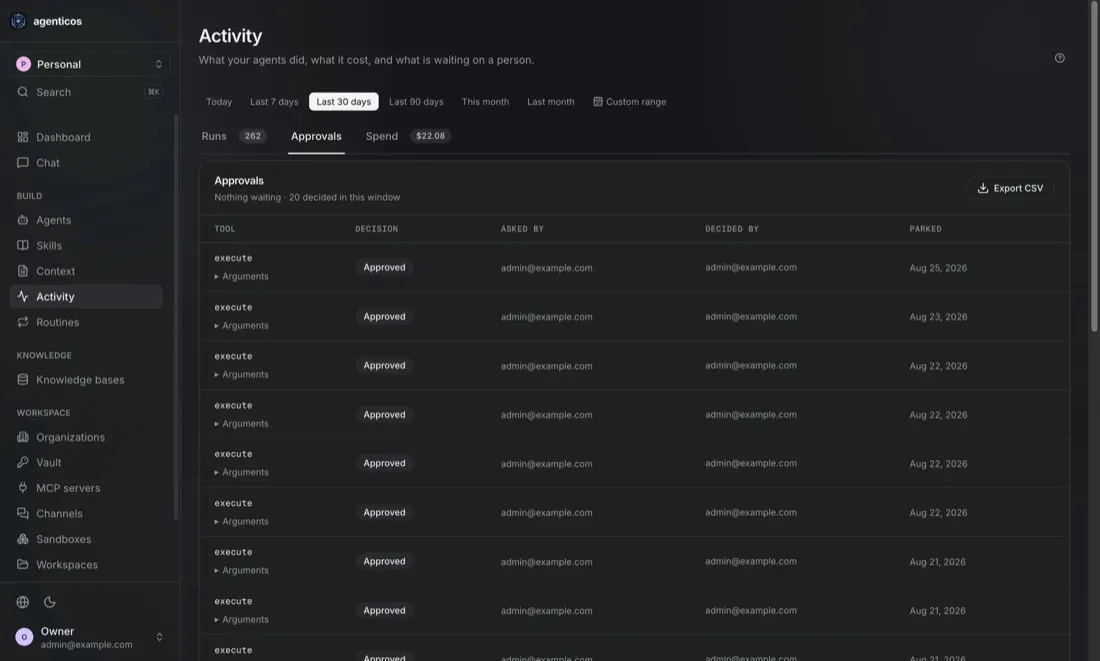
Screens from the workspace our agents run in, with example data.
Each page shows where agents fit in that team or industry.
Open standards, open-source tooling and published research, all public, so you can check our engineering before you hire us.
Shaping agentic AI
Vstorm was the first agentic AI engineering company to join the Agentic AI Foundation and received its 2026 Open Agentic AI Innovation Award.
Read the announcementOpen source
Framework contributors
We maintain our own open-source agent framework and contribute fixes to the frameworks our agents run on, through official partnerships with their teams. Breaking changes reach us before they reach your codebase.
Research
Peer-reviewed papers on agent architectures, evaluation and AI security, and an open benchmark anyone can rerun against our results.
Track record
Our client agents were in production before most of today's agent frameworks had a stable release. You get a team that already knows what breaks between a promising demo and a system people rely on every day.
Claim processing cut from 3 hours to 8 minutes, with a specialist still deciding.
Read case study
Real estate due diligence cut from weeks to minutes.
Read case study
98% of device activation workflows automated and error processing 10x more efficient.
Read case study
Each path starts with a free call with a founder or senior AI engineer. A build goes ahead only after its Proof of Value meets the agreed threshold.
We map one workflow with your experts and agree a success threshold before any build.
Best whenYou want the success test agreed before you commit to a build.
A Proof of Value shows accuracy and running costs before the full build.
When Clean Text Is Not Enough: Structured Extraction for RAG enables richer retrieval and accuracy—explore smarter solutions.
Why bother with small models when capable LLMs are available? Because businesses may face stricter requirements than inidividual users

IE emerges in making sense of this data deluge, transforming unstructured data into structured actionable information. AI for companies