
Shaping agentic AI
Agentic AI Foundation
Vstorm was the first agentic AI engineering company to join the Agentic AI Foundation and received its 2026 Open Agentic AI Innovation Award.
Read the announcementData rooms read by agents, findings judged by experts
For Mapline.AI we built an agent that cut real estate due diligence from weeks to minutes, and every finding cites the page it came from.
Deal leadYour team
The seller uploaded the data room for the warehouse site. Can the review agent check zoning and leases?
Review agentAgent
dataroom.list_files leases, permits and surveys parser.read_layout tables and scanned exhibits search.retrieve filtered by site and type gis.get_parcel zoning, wetlands and roads Draft report ready. One lease allows a use the current zoning does not, so it needs your review.
Review agentAgent
report.share findings with cited pages Report shared with the deal team. Each finding links to the page it came from.

Three-agent product advisor guiding customers through print-order configuration.
Read case study
HIPAA-compliant guideline-executing triage — 42% to 98% on the open 50-scenario benchmark.
Read case study
Text-to-workflow agents building validated node graphs inside the platform.
Read case study
Supply chain intelligence agents reducing manual coordination overhead.
AI agent implementation for a global automotive enterprise.

Bilingual English/Arabic agent inside ARIJ's Moodle environment, answering only from ARIJ's own knowledge base.
Agents read the documents and draft the findings, and your experts decide what they mean.
Where it stallsData rooms hold piles of mixed, messy documents.
What we do Agents parse and classify every file, scanned exhibits and tables included, and index them by topic.
Where it stallsReviewers miss what sits in a different file.
What we do An agent cross-checks facts across documents and flags conflicts, such as a lease that breaks zoning.
Where it stallsFindings are hard to trace back to a source.
What we do Every finding cites its page, and retrieval is filtered by asset and document type.
Whatever comes in, every project is built from the same parts below, set up for your files and your systems.
Reviews we support
How we build it
Parsing for tables, exhibits and scans, chosen on your hardest documents.
Search limited to the right asset, location and document type, then re-ranked by source.
Read access to your data room, GIS data and public records, with the permissions you set.
Risk findings stop for an expert, sensitive data is encrypted and every step is traced.
Not seeing your case? Bring the data room or file set that slows you down and we start from that.
Tell us about your workflowThey work in the tools your team already uses, take on whole tasks and stop for a person where you decide.
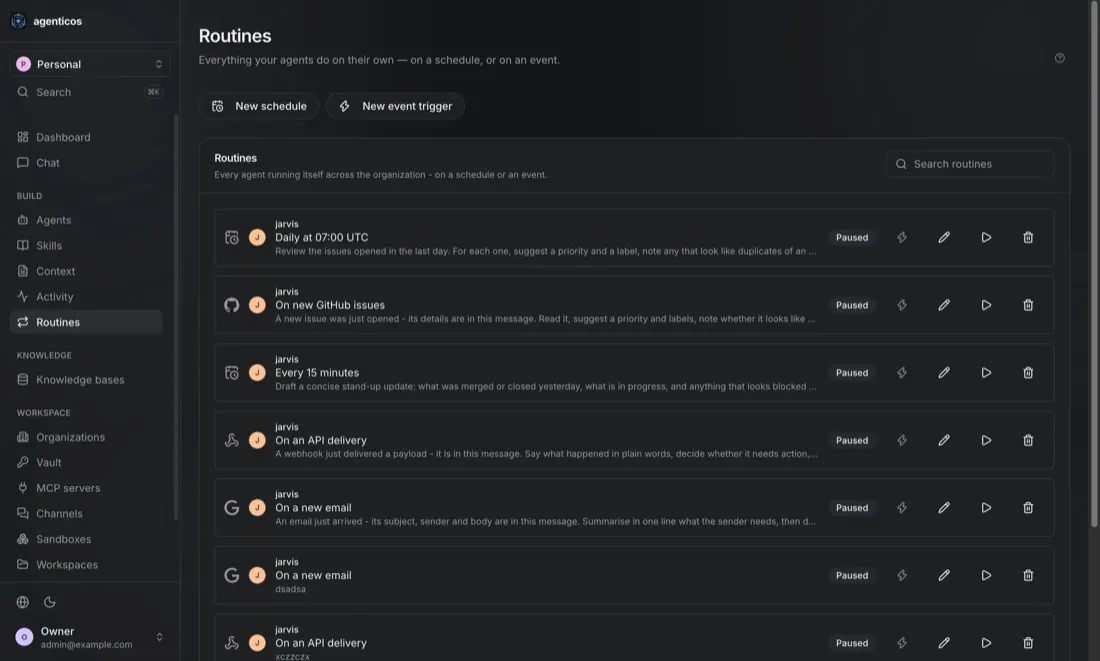
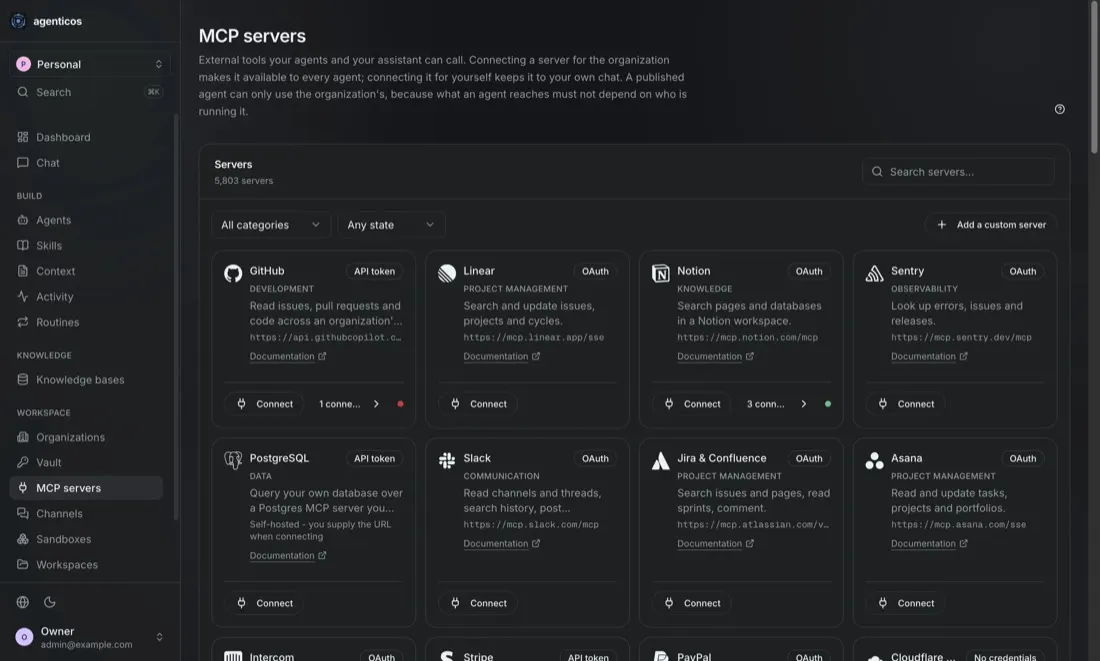
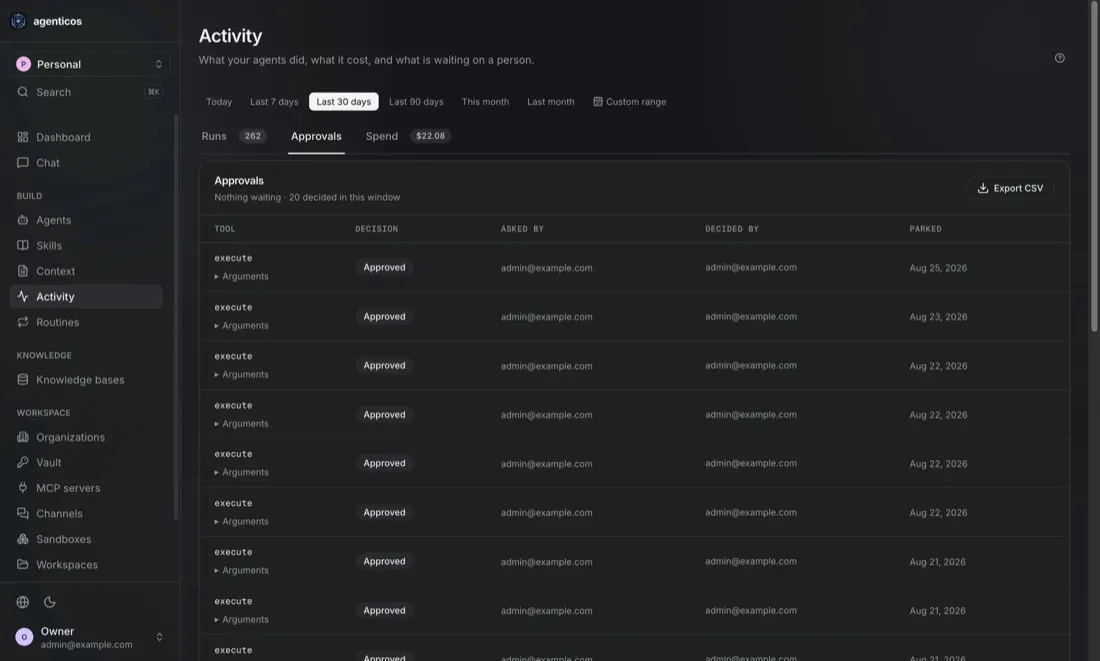
Screens from the workspace our agents run in, with example data.
Each page shows where agents fit in that team or industry.
Open standards, open-source tooling and published research, all public, so you can check our engineering before you hire us.
Shaping agentic AI
Vstorm was the first agentic AI engineering company to join the Agentic AI Foundation and received its 2026 Open Agentic AI Innovation Award.
Read the announcementOpen source
Framework contributors
We maintain our own open-source agent framework and contribute fixes to the frameworks our agents run on, through official partnerships with their teams. Breaking changes reach us before they reach your codebase.
Research
Peer-reviewed papers on agent architectures, evaluation and AI security, and an open benchmark anyone can rerun against our results.
Track record
Our client agents were in production before most of today's agent frameworks had a stable release. You get a team that already knows what breaks between a promising demo and a system people rely on every day.
Real estate due diligence cut from weeks to minutes.
Read case study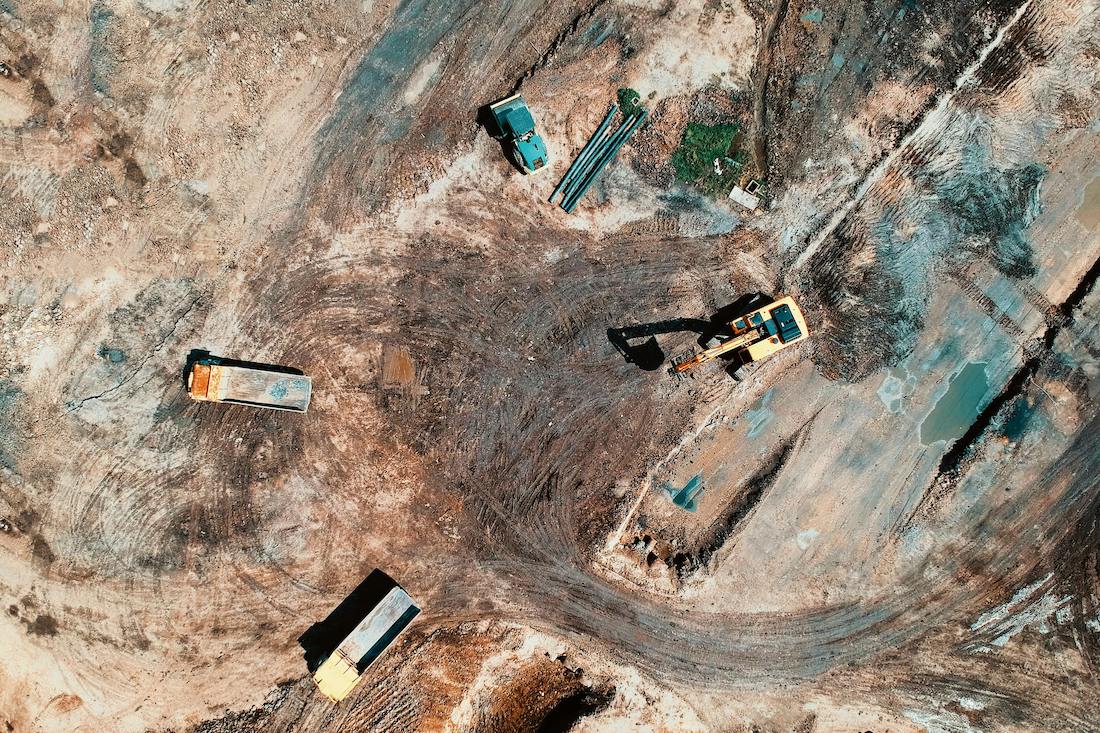
Claim processing cut from 3 hours to 8 minutes, with a specialist still deciding.
Read case study

Conversion to a final sale rose from about 20% to about 40%.
Read case studyEach path starts with a free call with a founder or senior AI engineer. A build goes ahead only after its Proof of Value meets the agreed threshold.
We map one workflow with your experts and agree a success threshold before any build.
Best whenYou want the success test agreed before you commit to a build.
A Proof of Value shows accuracy and running costs before the full build.
Advanced RAG pipeline, part 1: Rerankers enhance search precision via smart result ranking. Discover our methods
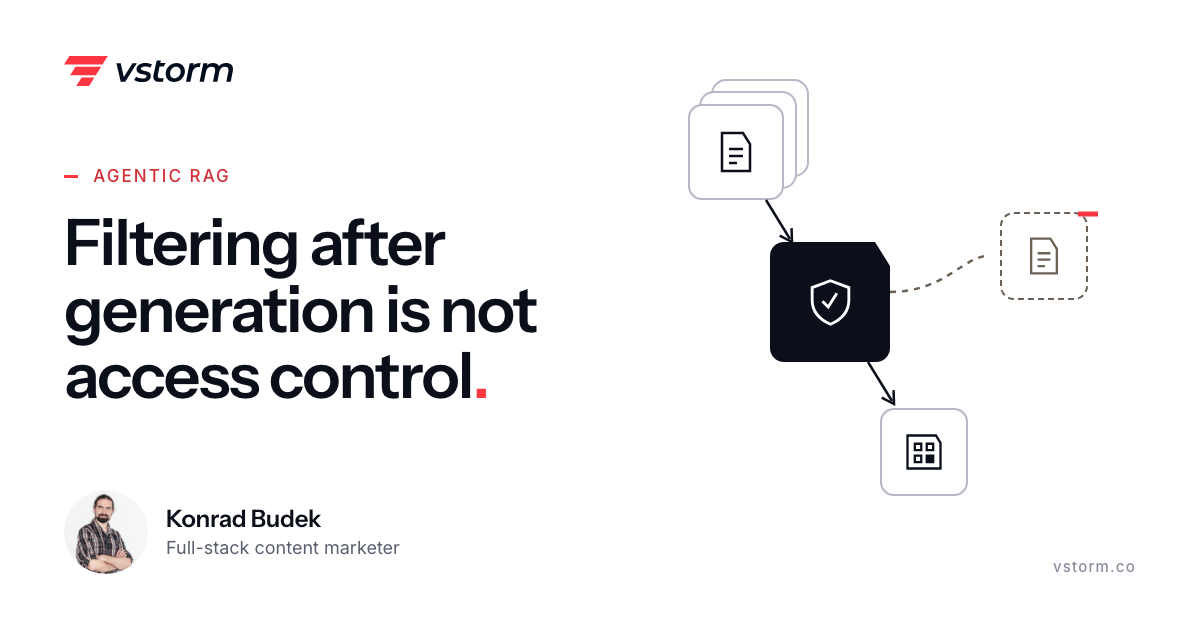
How agentic RAG changes architecture, knowledge and access control: corrective vs self-reflective designs, what they cost, and where permission checks belong.
Two pipelines, LlamaParse agentic parsing and hybrid dense-sparse search in Qdrant: how we built a production RAG system for geopolitical intelligence.