
Shaping agentic AI
Agentic AI Foundation
Vstorm was the first agentic AI engineering company to join the Agentic AI Foundation and received its 2026 Open Agentic AI Innovation Award.
Read the announcementClaim files read by agents, decided by your specialist
For a US health insurer we cut claim review from 3 hours to 8 minutes, and a specialist still decides on every claim.
Intake agentAgent
portal.fetch_claim policy, scans and notes parser.read handwritten forms included A new accident claim is assembled into one case file.
Review agentAgent
model_a.extract dates, exclusions, procedures model_b.extract the same fields, independently checks.compare both readings, field by field benefits.get_limits limits already used Summary ready with one flag: the two readings disagree on the accident date. Please check it on the scan.
Review agentAgent
claims.log_decision summary, flags and decision Decision logged with the summary and both readings, so an auditor can trace it.

Three-agent product advisor guiding customers through print-order configuration.
Read case study
HIPAA-compliant guideline-executing triage — 42% to 98% on the open 50-scenario benchmark.
Read case study
Text-to-workflow agents building validated node graphs inside the platform.
Read case study
Supply chain intelligence agents reducing manual coordination overhead.

AI agent implementation for a global automotive enterprise.

Bilingual English/Arabic agent inside ARIJ's Moodle environment, answering only from ARIJ's own knowledge base.
Agents do the reading and checking, and your specialists keep every decision.
Where it stallsBacklogs grow faster than you can hire reviewers.
What we do Agents assemble and summarise each file, so a specialist starts from a checked summary with flags.
Where it stallsReviewers re-read the same documents on every claim.
What we do An agent parses policies, scans and notes once and points to the line behind each finding.
Where it stallsErrors slip through when one person reads everything.
What we do Two models read each file and code compares them. When they disagree, the claim goes to a person.
Whatever comes in, every project is built from the same parts below, set up for your files and your systems.
Claims we handle
How we build it
Policies, scans, notes and images parsed into one case record, handwriting included.
Two models extract the same fields and an algorithm compares them.
Live calls to your benefits database and claims system, with the access rights you set.
Escalation rules agreed with your reviewers and enforced in the system.
Not seeing your case? Bring the claim type that takes your specialists longest and we start from that.
Tell us about your workflowThey work in the tools your team already uses, take on whole tasks and stop for a person where you decide.
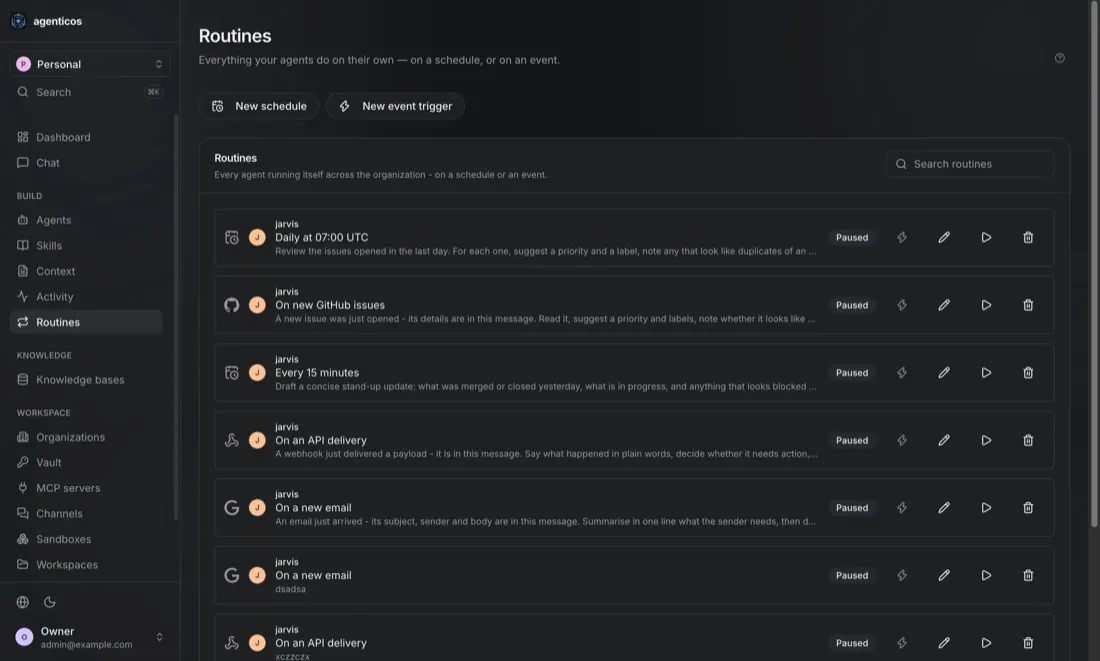
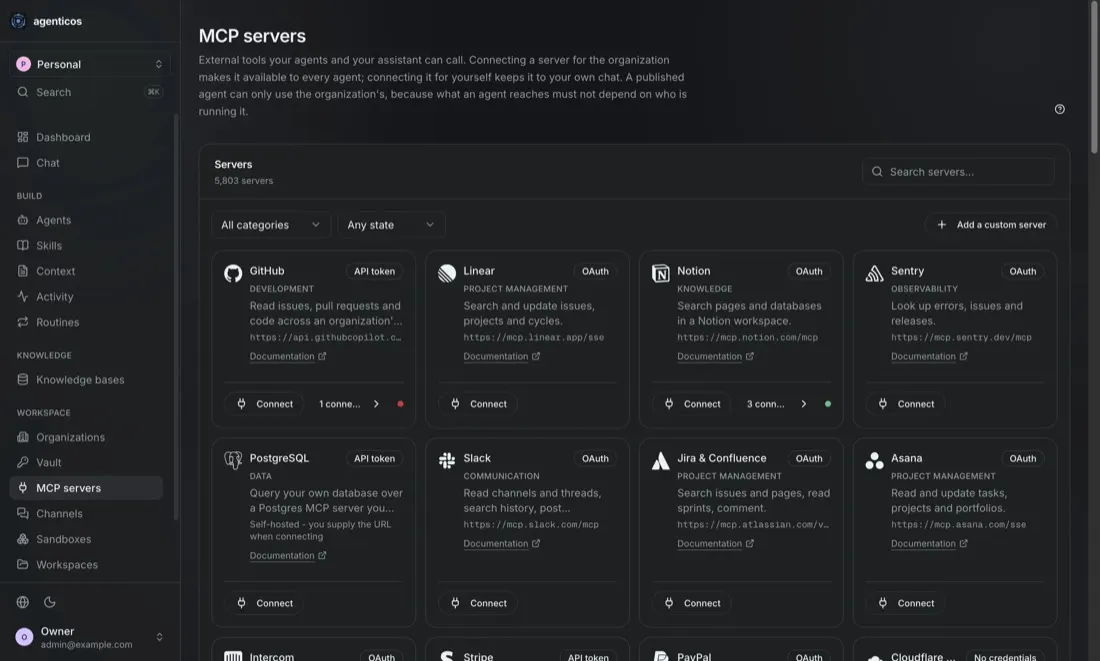
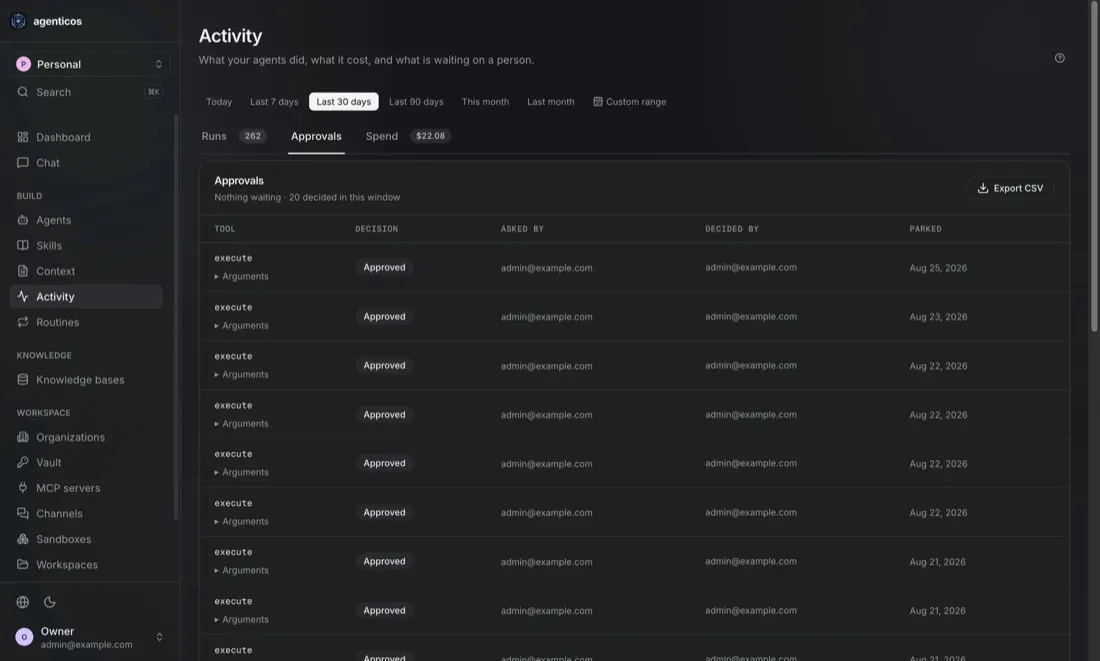
Screens from the workspace our agents run in, with example data.
Each page shows where agents fit in that team or industry.
Open standards, open-source tooling and published research, all public, so you can check our engineering before you hire us.
Shaping agentic AI
Vstorm was the first agentic AI engineering company to join the Agentic AI Foundation and received its 2026 Open Agentic AI Innovation Award.
Read the announcementOpen source
Framework contributors
We maintain our own open-source agent framework and contribute fixes to the frameworks our agents run on, through official partnerships with their teams. Breaking changes reach us before they reach your codebase.
Research
Peer-reviewed papers on agent architectures, evaluation and AI security, and an open benchmark anyone can rerun against our results.
Track record
Our client agents were in production before most of today's agent frameworks had a stable release. You get a team that already knows what breaks between a promising demo and a system people rely on every day.
Claim processing cut from 3 hours to 8 minutes, with a specialist still deciding.
Read case study
5+ hours saved per doctor per week and 20%+ more patient engagement.
Read case study

Conversion to a final sale rose from about 20% to about 40%.
Read case studyEach path starts with a free call with a founder or senior AI engineer. A build goes ahead only after its Proof of Value meets the agreed threshold.
We map one workflow with your experts and agree a success threshold before any build.
Best whenYou want the success test agreed before you commit to a build.
A Proof of Value shows accuracy and running costs before the full build.
Denials reached 11.8% in 2024 and 41% of providers now see one claim in ten refused. What denial management covers and where automation lands.
How insurance fraud detection works with AI and agentic systems: text analysis, cross-source correlation, identity screening and real-time claim intake.
How artificial intelligence in finance is moving from automation to autonomous agents — real use cases, benefits, and where firms go wrong.