An engineering voice at PRINTING United Expo in Las Vegas
What printers at PRINTING United Expo asked about AI, and what surprised them most: the need for engineering, unexpected outcomes, pace and no magic.

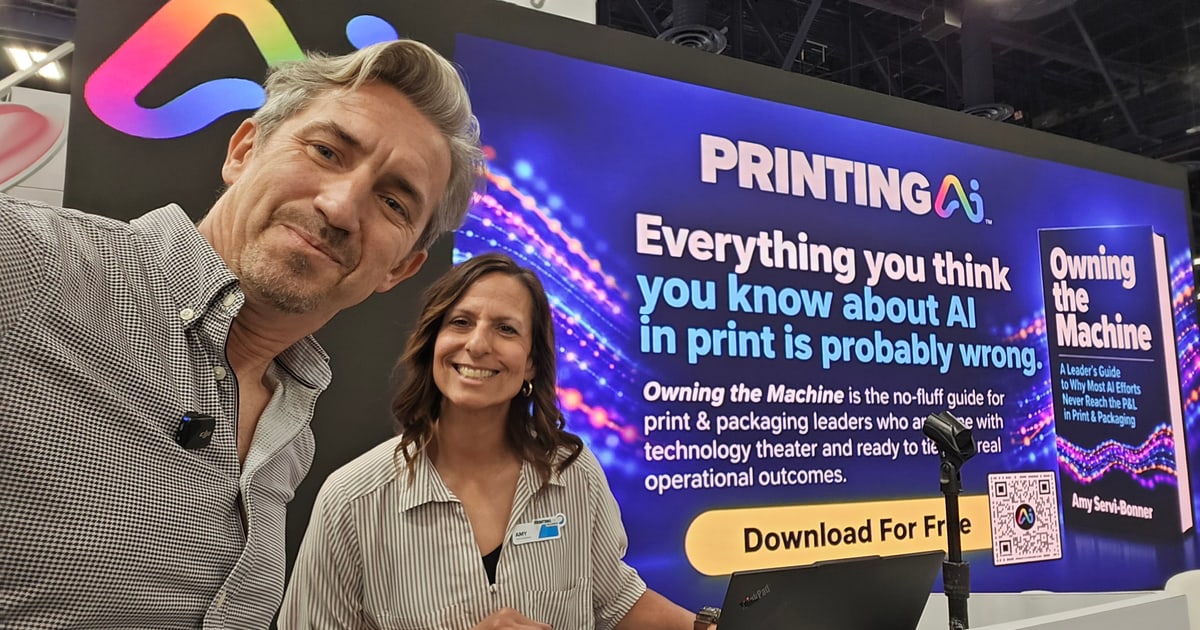
Last week I had the privilege to be a guest of PRINTING AI to speak about what AI projects at printing companies actually are from an engineering perspective.
As with previous conferences, what we brought to all the panel discussions I participated in turned out to be of value for participants: a down-to-earth perspective on what value and challenges to expect from AI deployments.
Where are printing companies in terms of AI adoption? #
What surprised me is that the printers at the Expo were insight-hungry and so far had very little experience with agentic AI. Their high-paced, margin-shrinking businesses are severely challenged by market forces, yet the opportunity to automate customer-facing order processing or knowledge management inside their companies with AI is mostly untapped.
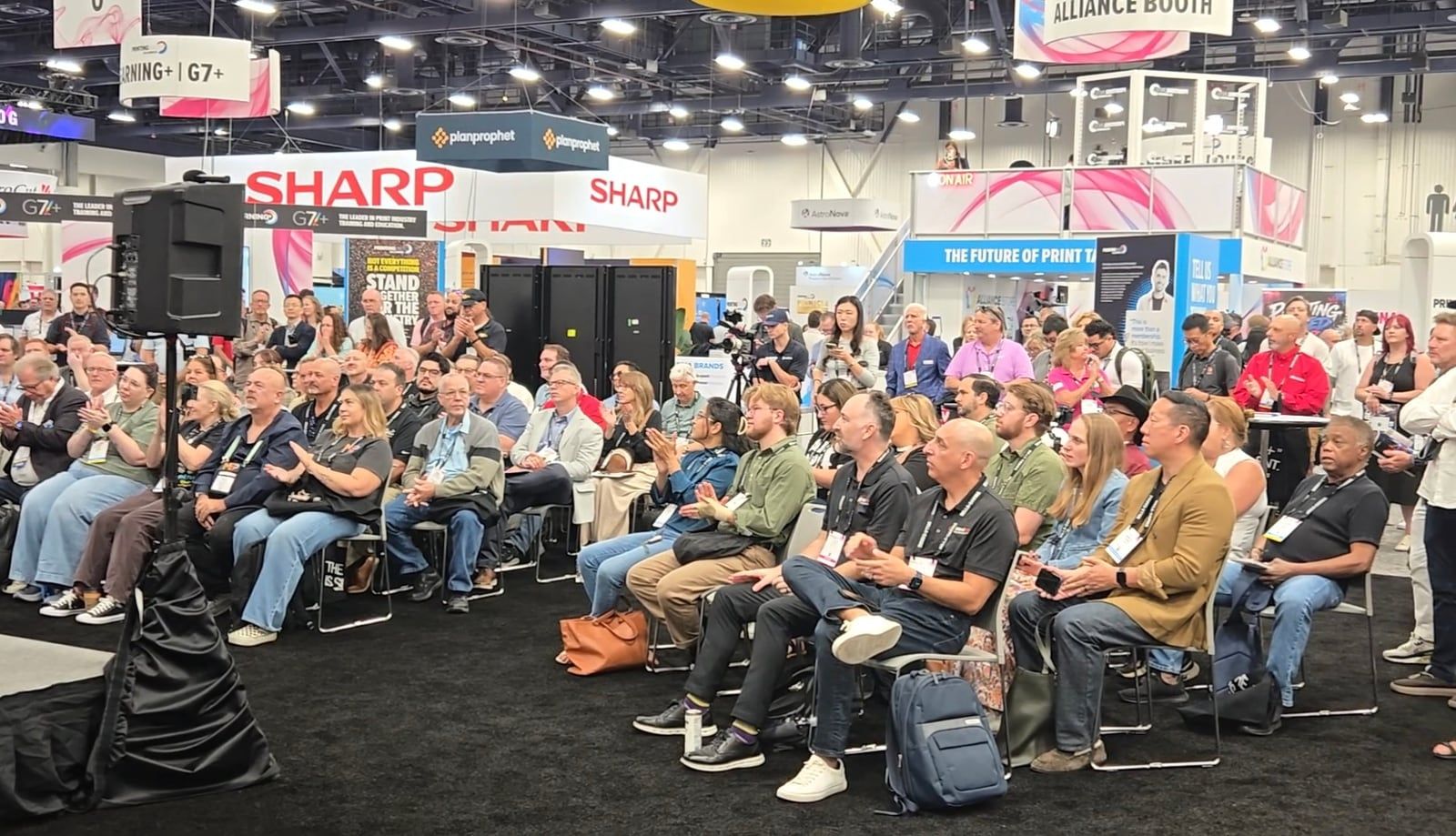
What printers have focused on is job scheduling and fulfillment, where innovative ML solutions are being offered as part of existing dedicated software packages. Other opportunities to optimize operations for increased margins remain generally unexplored. The interest in those was the driving force bringing the audience to our PRINTING AI Pavilion.
Know before doing #
Vstorm participated as the official development partner of PRINTING AI, which offers consulting services to printing companies. These come in the form of a readiness assessment and defining the scope and milestones of an AI transformation.
PRINTING AI is led by Amy Servi-Bonner, who acted as a host and interviewer, and boy, she does know what questions to ask engineers. Our intellectual dues on the Expo stage were paid by providing an opportunity to hear the unspoken truths about AI deployment, look under the hood of it and, by that, cut through the marketing fluff surrounding AI in online media.
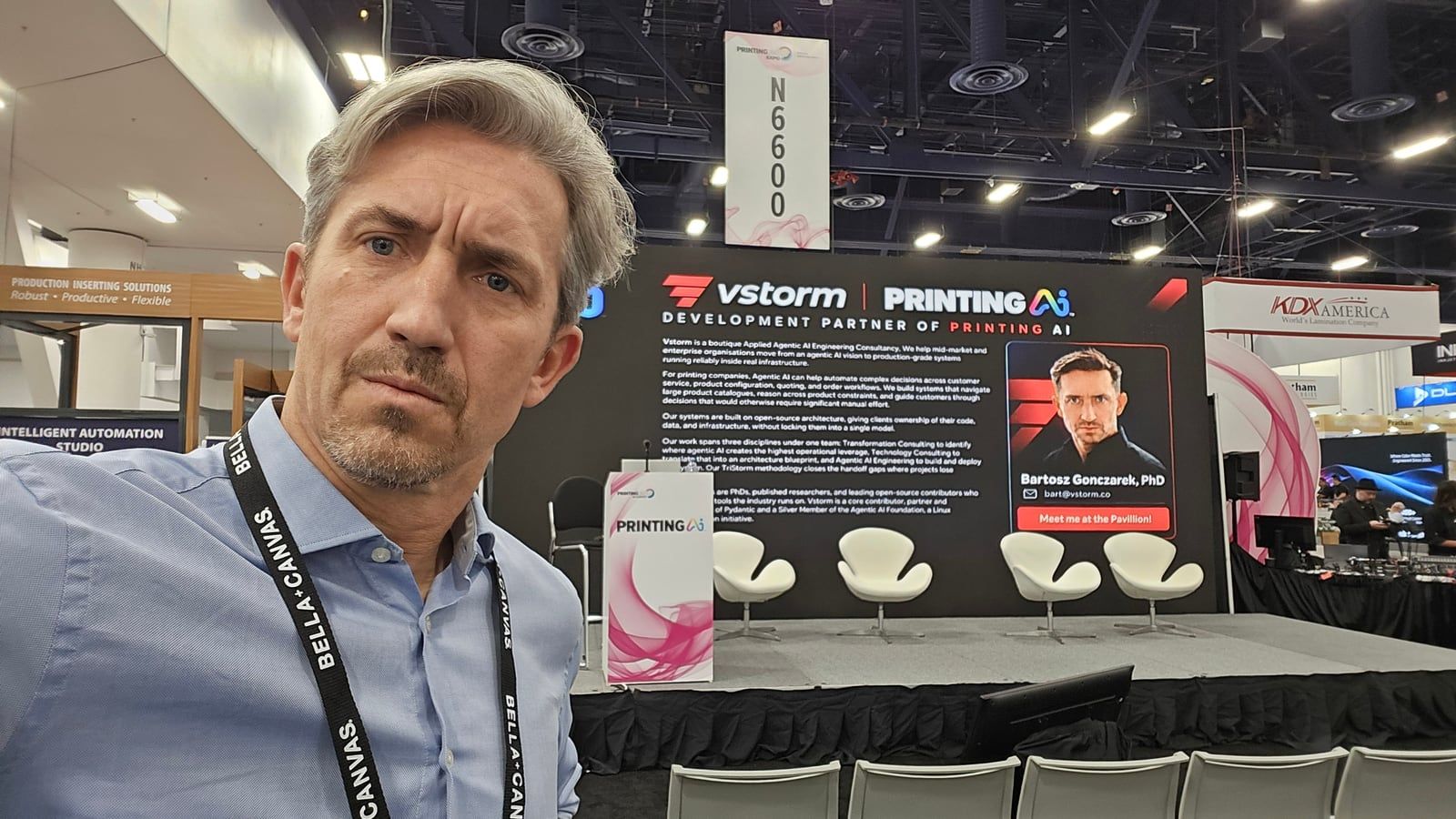
Did we succeed? I think so, judging by my experience of being pulled aside by people on the Expo floor who shared with me that it was an eye-opening experience for them. The only complaint I've heard was that the scale of our pavilion was too small, and the message should be broadcast more widely.
Another good indicator of success was that companies that are yet to begin their AI transformation lined up to secure initial advisory services from PRINTING AI, to plan their steps first, before doing anything AI-related.
What AI-stuff surprised printers the most? #
Here are a few tidbits that the audience found most surprising (and, to a degree, most revealing):
The need for engineering in AI is typically underappreciated
It is so because their software vendors provide them with "AI enhancements" that are positioned as a panacea to their challenges, until they realize they are not. But that only comes with the negative experience of trying to use the AI enhancements of their existing systems and failing.
Most printing companies are not yet at that stage. The need to put engineers on the job to apply AI the right way only arises later on, after initial tinkering and investment falls short of delivering on expectation. This is where most of our clients find us. Better, in our opinion, to skip the failure stage and onboard qualified engineers from the start.
The unforeseen outcomes of adopting agentic AI
With or without AI, each system deployment is measured against preestablished assumptions to check if goals were accomplished. With AI, however, the outcomes can be genuinely surprising. For example, in an AI-supported web-to-print ordering process, our goal was to remove friction, which we measured in decreased time from product selection to print order. But the real gain was seen in fewer abandoned orders and increased quantity and conversion.
In support automation, where agentic AI was to take over 70% of simpler inquiries, it actually outperformed that assumption, taking 94% of simple queries to resolution without the need for human intervention. The measure of its success was conversations ending with: "I don't care if you're AI, tell your humans you did good."
Each project completed by Vstorm had its own interesting moments where positive results caught customers by surprise, revealing unexpected but beneficial side effects.
AI is moving fast... too fast for many
For AI engineers, the way systems were developed in 2025 is already obsolete. The field moves fast due to the evolution of models, surrounding frameworks, and standards being used in the process. This means that the systems created at the end of 2026 can be simpler, faster, and more capable than the elaborate and complex systems from the past year.
Where a few agents were needed to accomplish a task, one can do. Larger contexts can be used. Better tools can help agents navigate the data sources. Transparency of agentic AI operations increases, too.
What this means for printing companies is that starting late doesn't mean being left behind, as long as they approach AI adoption the right (modern) way.
No magic, actually
Each opportunity to meet early adopters, or those that don't adopt AI just yet, is an opportunity for Vstorm to take the position to dispel the myths. We, as engineers, fight magical thinking, and there's a lot of it around (especially in Vegas, where the conference took place this year). What I offered (with appreciation from the audience) was a call to sober up and think of AI as a tool, not a sentient entity or superintelligence.
It is a powerful tool today and should be seen as such. One that completes the toolbox of methods at hand that may improve a printing business.
AI is not shipped as a standalone component (ever); it is actually shipped as a combination of earlier, more deterministic 'tools' that work with AI, which is probabilistic in nature. But the results of combining the two, although they may look magical, are not magic: they can be measured, bounded and controlled.
Therefore, for each company adopting agentic AI, if it pulls a magic trick, our job is to make sure that owners understand what happens behind the scenes, and control it, too.
Where it left us #
After observing how our sober hints and project-based examples landed, we are seriously considering opening a YouTube channel. What holds us back, however, is that the algorithms will prefer the flashy and catchy vids on how superintelligence will steal your print job away, instead of sober, experience-grounded talk.
Luckily, conferences such as PRINTING United Expo in Las Vegas let our message bypass the algorithm and reach participants directly. What I'm really proud of is how well it was received and appreciated by those who spent time listening to our panel discussions.
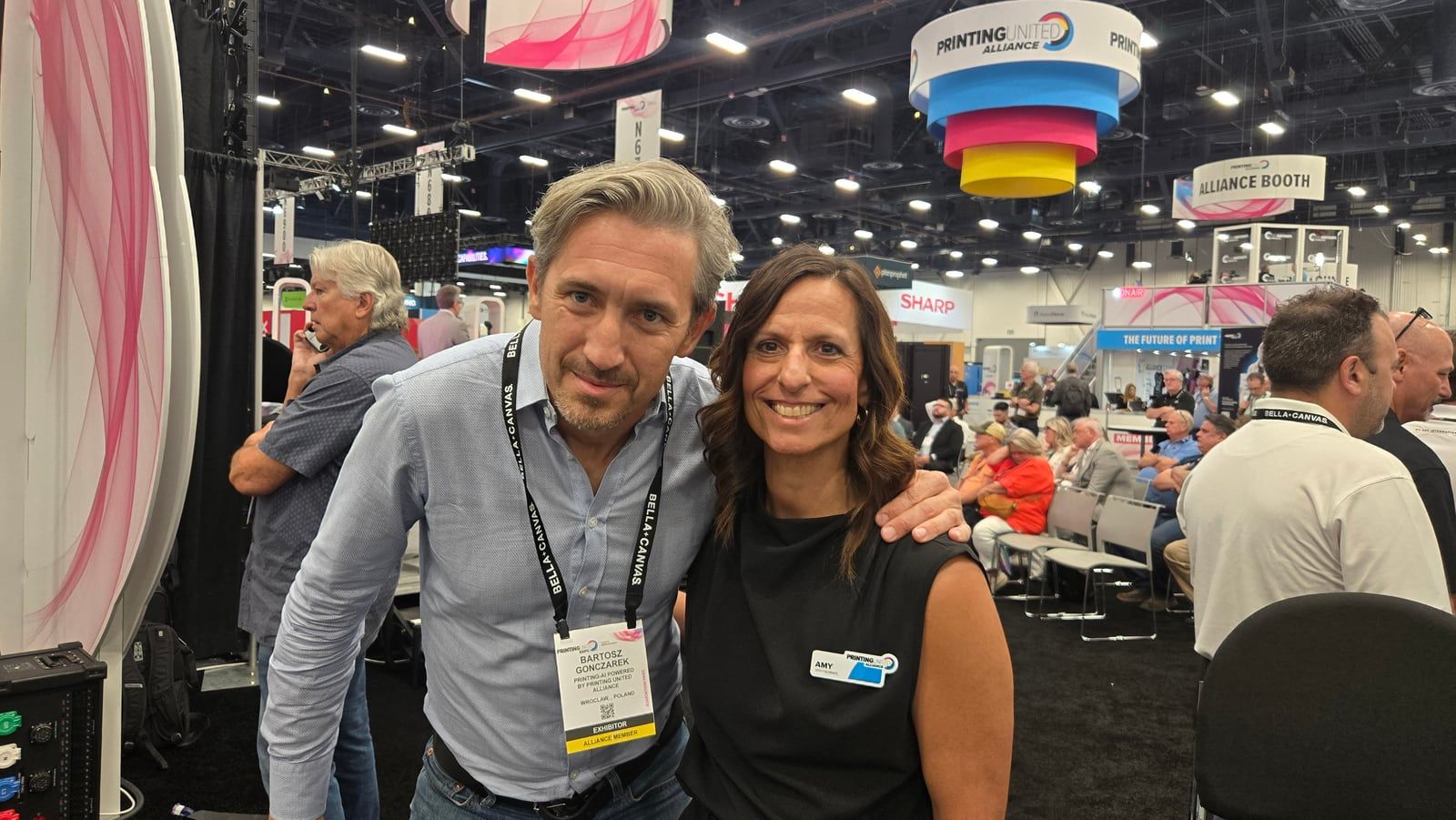
For printing-related consulting services, please contact Amy Servi-Bonner from PRINTING AI at aservi@printing.org.
For AI engineering, please book a session with Vstorm.