Back to blog
Medical coding automation: what it is, why it matters, and where agentic AI takes it next

Medical coding automation is reshaping how healthcare providers translate clinical encounters into billable claims. Every diagnosis, procedure, and service performed in a clinical setting must be converted into a standardised alphanumeric code before a provider can be reimbursed. Done manually, that process is slow, error-prone, and increasingly unsustainable. Done with the right automation approach, it becomes a reliable, auditable function that protects revenue and reduces compliance risk. This article explains what medical coding is, where manual processes break down, what automation concretely changes, and how agentic AI is extending that change further than previous generations of tooling could reach.
What medical coding actually is
Medical coding is the process of translating clinical documentation, such as physician notes, discharge summaries, procedure records, into standardised codes drawn from systems such as ICD-10 (diagnoses), CPT (procedures), and HCPCS Level II (services and supplies). These codes are submitted to payers, like insurers, Medicare, or Medicaid, as the basis for reimbursement. They also feed into compliance reporting, quality metrics, and population health data.
The system has deep roots. The Current Procedural Terminology (CPT) codeset was introduced in 1966 to standardise communication among healthcare stakeholders. The World Health Organisation introduced ICD in the early 1990s. Today, nearly 11,000 CPT codes exist, and the system undergoes significant changes annually. Coders must remain current across all of them while working through high volumes of clinical documentation, often under time pressure.
How medical coding is done today
In most healthcare organisations, medical coding is still predominantly a human function. A certified coder receives completed clinical documentation from the EHR, reviews it for diagnostic and procedural detail, selects the appropriate codes from the relevant codeset, and submits a coded claim to the billing team. For complex encounters; multi-diagnosis admissions, surgical cases, or patients with comorbidities; a single record can require hours of review.
The workforce supporting this function is under strain. The US healthcare system faces a 30% shortage of medical coders, and coder turnover is high. Many organisations supplement their in-house teams with offshore coding services or outsourced RCM vendors, which introduces coordination overhead and variable quality.
An earlier generation of tooling, computer-assisted coding (CAC), attempted to reduce this burden through rule-based code suggestions. CAC systems flag candidate codes based on keyword matching and structured data in the EHR, but they still require a human coder to review, validate, and finalise every record. They accelerate throughput; they do not replace the judgement required for accurate, compliant coding.
Why manual coding breaks down and what it costs
The financial consequences of coding inaccuracy are well documented. The American Medical Association estimates that up to 12% of medical claims are submitted with inaccurate codes, resulting in denials or payment delays. Across the industry, poor billing practices result in an estimated $125 billion in annual losses for US providers through denied claims, underpayments, and administrative rework. In 2024 specifically, coding-related denials surged by 126%, one of the largest year-on-year increases recorded.
The downstream cost compounds quickly. According to Becker’s Hospital Review, the average cost to rework a single denied claim exceeds $118. A 250-bed hospital averaging 2,000 denials per month spends nearly $3 million annually on correction and resubmission alone, before accounting for the revenue that is never recovered.
Beyond revenue, there is a compliance dimension. Upcoding, assigning a higher-paying code than the documentation supports, and undercoding both carry regulatory risk. The Office of Inspector General (OIG) and CMS impose penalties for non-compliance, and in serious cases, providers can face exclusion from federal programmes.
The root causes are systemic: an annual churn of code updates, expanding documentation requirements tied to value-based care models, and a workforce that is shrinking relative to demand. Manual processes cannot absorb this complexity indefinitely.
What medical coding automation means in practice
Modern medical coding automation uses natural language processing (NLP) and large language models (LLMs) to read clinical documentation, including unstructured physician notes, and generate accurate billing codes without manual intervention at every step. This is a meaningful departure from rule-based CAC systems.
Instead of relying on fixed keyword rules, modern AI interprets provider notes the way a trained coder would — checking medical necessity, NCCI edits, and payer policies along the way. The result is a system that can handle volume at scale, with measurable accuracy improvements. Health systems that have deployed AI coding platforms are already seeing a 30 to 70% reduction in coding-related FTE workload, coding cycles that run 50% faster, and denial rates that drop by 20 to 40%.
The human coder does not disappear in this model: they shift. Routine, high-confidence cases are handled by the system. Complex cases, low-confidence outputs, and compliance-sensitive records are escalated to a certified coder for review. Regulatory guidance from the OIG and DOJ increasingly reinforces this human-in-the-loop principle: AI generates; humans validate.
The table below summarises the three generations of coding support technology.
Dimension |
Computer-assisted coding (CAC) |
LLM-powered autonomous coding |
Agentic AI coding |
Core pattern |
Rule-based keyword matching; suggests codes for human review |
NLP & LLM reads unstructured notes; generates codes autonomously |
Multi-agent: plan → retrieve → reason → validate → act |
Data sources |
Structured EHR fields only |
Unstructured clinical notes, structured EHR data |
EHR, billing history, payer rules, clinical guidelines, prior coding decisions |
Human involvement |
Required at every record |
Required for low-confidence and complex cases |
Triggered only for exceptions; audit trail generated automatically |
Compliance checking |
Minimal; relies on coder knowledge |
Embedded payer policy & NCCI edit checks |
Active validation agent cross-checks regulatory and payer requirements at each step |
Adaptability |
Static rule updates required manually |
Retrainable on new codeset versions |
Continuous learning from coder corrections and audit feedback |
Throughput impact |
Moderate; still bottlenecked by human review |
High; significant FTE reduction on routine cases |
Highest; exceptions-only human review scales with volume |
Ready to see how agentic AI transforms business workflows?
Meet directly with our founders and PhD AI engineers. We will demonstrate real implementations from 30+ agentic projects and show you the practical steps to integrate them into your specific workflows—no hypotheticals, just proven approaches.
Where agentic AI changes the picture
Standard AI medical coding tools process documents and produce code suggestions. Agentic AI systems do something structurally different: they plan a sequence of actions, retrieve information from multiple sources, reason across that information, and iterate until they reach a confident, compliant output. Applied to medical coding, this means the system does not simply read a clinical note, it investigates it.
A typical agentic coding workflow runs as follows. When a clinical encounter is completed, an orchestrator agent receives the record and decomposes the coding task. Retrieval agents pull the patient’s history, prior coding decisions, the relevant payer’s current rules, and applicable clinical guidelines. A reasoning agent reconciles the documentation against code requirements and surfaces any gaps or ambiguities. A validation agent cross-checks the proposed code set against NCCI edits, medical necessity criteria, and compliance flags. Only records that fall below a confidence threshold, or that carry specific compliance risk, are escalated to a human coder for review. Every step is logged with a timestamp and a reasoning trace, creating an immutable audit trail.
The human-in-the-loop principle is not merely a best practice here, it is increasingly a regulatory requirement. OIG and DOJ guidance both point toward oversight and accountability for AI-generated codes. Agentic systems handle volume; certified coders handle exceptions and provide the accountable sign-off regulators expect.
At Vstorm, we have applied this multi-agent approach directly in a healthcare setting. Working with a US healthcare provider serving over 100,000 members across multiple states, we deployed a multi-channel, pre-appointment AI Agent that handles complex, personalised patient communication across the care pathway. The system meets strict healthcare compliance requirements while operating across multiple channels, demonstrating the same core architectural pattern that makes agentic AI effective in coding: orchestrated agents, retrieval from multiple data sources, and human escalation only where the system cannot act with confidence. Each doctor on the platform now saves more than five hours per week, and patient engagement has increased by over 20%. The underlying engineering principles transfer directly to coding workflows.
“AlphaCoding has already made a measurable impact on our coding accuracy and efficiency. It’s intuitive and enhances our clinicians’ expertise by surfacing the appropriate details and helping align with CMS guidelines, allowing us to code faster.”
— Melissa Ward, RN, Post-Acute Care Executive, Adventist Health, Netsmart AlphaCoding launch, November 2025
What to look for in a healthcare revenue cycle automation implementation
The technology gap in medical coding automation is largely closed. The implementation gap is not. Most projects that stall do so not because the AI fails, but because the integration, change management, and governance work was underestimated.
When evaluating an AI medical coding or agentic coding implementation, the following dimensions determine whether a system reaches production or stays a pilot.
EHR integration. The system must connect to your existing infrastructure. Parallel workflows, where coders must operate in two systems simultaneously, eliminate efficiency gains before they accumulate.
Specialty coverage. Coding requirements differ substantially across specialties. Orthopaedics, oncology, and behavioural health each carry distinct documentation and coding conventions. A system trained on general acute care records will underperform in specialist settings.
Explainability. Every code suggestion should carry a source citation traceable to the clinical documentation. Auditors and regulators will ask for it; the system should produce it automatically.
Compliance architecture. HIPAA, CMS guidelines, and payer-specific rules need to be embedded in the validation layer, not added after deployment.
Continuous learning. Coding standards change annually. A system that cannot incorporate coder corrections and codeset updates will degrade in accuracy over time.
The failure pattern we see most often mirrors what the broader AI industry reports: a pilot is run on a controlled dataset, results look strong, and then production deployment encounters EHR integration complexity, an absence of operational ownership, and compliance questions that were not addressed during design. Our approach to healthcare AI implementations addresses each of these from the outset because the engineering problem and the operational change problem have to be solved together.
Conclusion
Medical coding automation is no longer experimental. The combination of NLP, LLMs, and agentic architectures has made it possible to handle high volumes of coding work with accuracy that meets or exceeds manual benchmarks at a fraction of the cost and turnaround time. The financial case is compelling: a system that reduces denial rates by 20 to 40% in an organisation processing thousands of claims per month pays for itself quickly.
What holds most implementations back is not the technology. It is the gap between a successful pilot and a production-grade system embedded in real infrastructure, with real compliance requirements and real operational ownership. That gap is where engineering consultancy and change management expertise matter most.
Agentic AI is extending what automation can do in this space: from code suggestion to autonomous, multi-step investigation and validation, with human oversight applied precisely where it is needed. For healthcare organisations navigating a coder shortage, rising denial rates, and annual codeset complexity, this is not a future consideration. It is an available solution, and the organisations acting on it now are building a durable operational advantage.
Ready to see how agentic AI transforms business workflows?
Meet directly with our founders and PhD AI engineers. We will demonstrate real implementations from 30+ agentic projects and show you the practical steps to integrate them into your specific workflows—no hypotheticals, just proven approaches.
Summirize with AI
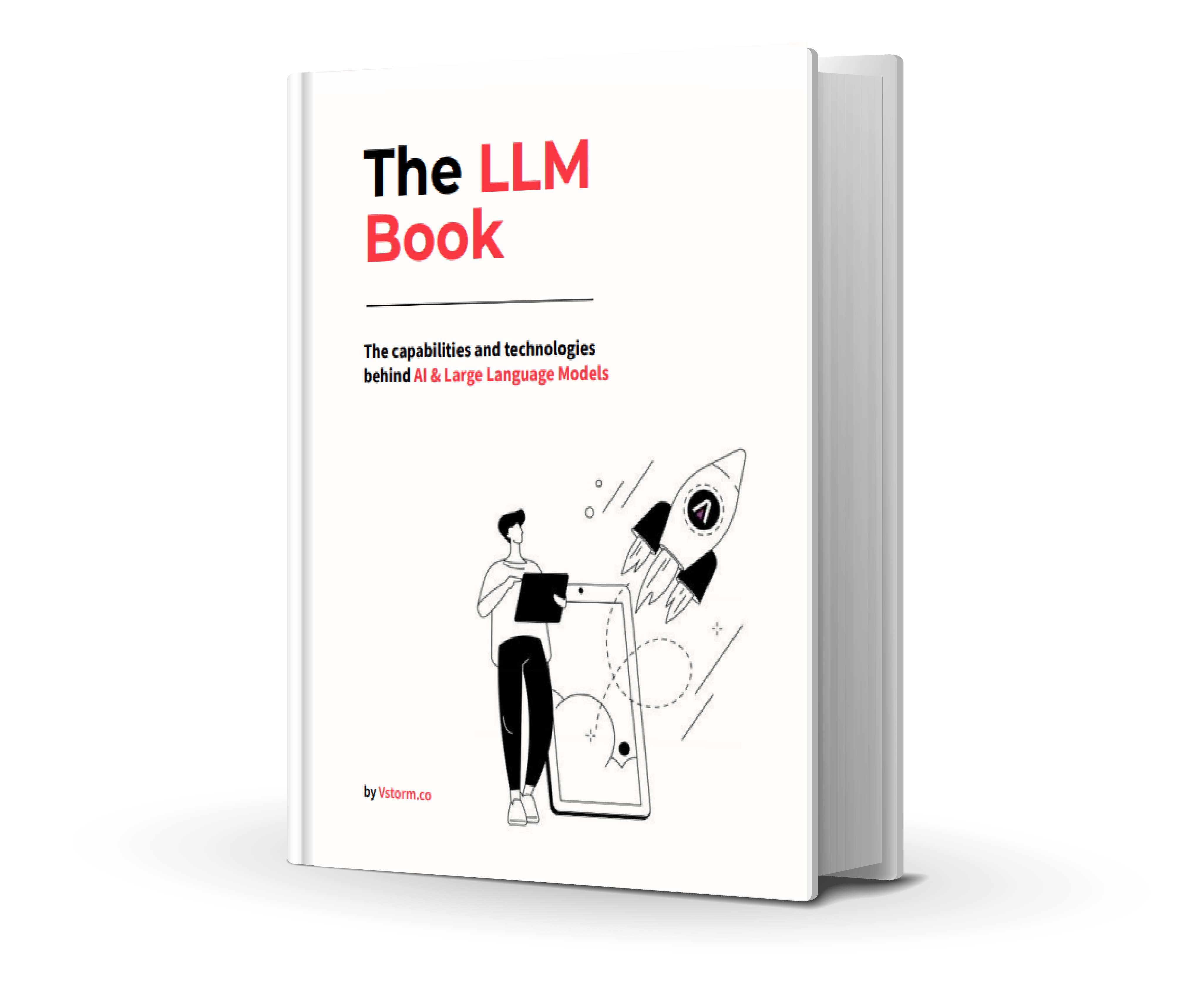
The LLM Book
The LLM Book explores the world of Artificial Intelligence and Large Language Models, examining their capabilities, technology, and adaptation.